
Ebola 2013-16: when science learned to listen
Early efforts to contain the West African Ebola outbreak failed because they were heavy handed and culturally insensitive. The tide turned when social anthropologists convinced responders to treat the epidemic as a social as well as medical issue.

Credit:
Licence: All Rights ReservedWellcome
16-minute read
16-minute read
Elapsed time:00:00Total time:00:00
Today, Kondema Kargbo is a focused, athletic young man – proud of his country and ambitious for the future. A dedicated member of Sierra Leone’s Lunsar Cycling Team, he dreams of one day riding in the Tour de France.
In 2014, though, such a future might have seemed almost unimaginable. Kondema was 12 years old when Ebola arrived in his family’s hometown. When his aunt fell ill with the disease, he and his relatives quarantined in their home for three weeks.
As days passed, more of Kondema’s relatives began to fall sick. Ambulances would come and take them away. Kondema would never see them again. Of the 22 people isolating in his household, only Kondema and his big brother survived.
To limit transmission, funerals were banned, so the brothers could not grieve properly. Even now, they don’t know where many of their relatives’ graves are. “We only know the burial sites of a few,” Kondema says. “The others… we were just told that they died.”
The 2013-16 West African Ebola outbreak remains the largest that has been seen, with more than 28,000 cases and 11,000 deaths. Its size was largely due to the failure of the initial public health response. Early efforts to prevent transmission, like those Kondema experienced, were heavy handed, culturally insensitive and often met with significant resistance. They struggled to limit new infections.
This failure was devastating. But it also led to the creation of new community-engagement strategies that went on to make containment much more effective. Along with vaccines, trial protocols and other tools developed in the outbreak, these are the basis of Ebola responses today.
Watch: How listening helped stop Ebola
Pressing play on the video above will set a third-party cookie. Please read our cookie policy for more information.
When Ebola swept through West Africa, the international response focused on controlling a virus. Communities needed something more: trust. This film tells the story of how anthropologists, community leaders and survivors helped reshape the response, turning local knowledge into life-saving action and changing how outbreaks are managed around the world today.
Kondema Kargbo
When I ride my bicycle, I forget everything. When I get stressed, I go ride. Sometimes I get flashback to Ebola. Ebola destroyed my family. Destroyed my people. It make against life. My name is Kondema Kargbo. I live in Sierra Leone. I was 12 years old when Ebola came to Lunsar. We lived in a family house. My grandmother and I lived in one room. My other aunts, uncles, sisters they lived in the other room. We were 22 in the house. When Ebola began in Sierra Leone we did not believe that Ebola was real. Some men, they said "the white man, they go up with the plane, then go scatter the poison in the bush." Some of them panic and they're afraid to talk to the white man. Even if the ambulance come some men, they take stone and they stone the ambulance. But, then my Granny got sick. And then, they quarantine me for 21 days. Then my Granny died. Ebola killed her. My sisters then died. Out of 22 people who lived in the house, 19 people died during Ebola. The Government banned funerals. So, I was not able to locate the graves where they were buried. This affected me a lot. My heart just died for everything. I was unable to do nothing. I was unable to do nothing for them.
Melissa Leach
The West African Ebola outbreak began at the end of 2013, but by August 2014, case rates had gone up and the world had begun to mount a response. Humanitarian agencies and international NGOs and the World Health Organization had begun to send outbreak control teams.
[Archive — WHO statement]
I am declaring the current outbreak of Ebola virus disease, a public health emergency of international concern.
Melissa Leach
And that response from the very beginning started to go quite badly wrong. Local people perceive outbreak control teams as disrespectful and often frightening. They assumed that they were actually after other things. To take people's land. Villagers were stealing their patients out of the Ebola treatment units. They're hiding people in the bush. They're digging trenches to stop outbreak control teams getting into their villages. The international response was being resisted and simply failing. The Wellcome Trust convened a meeting with scientists, people from government, people from the NGOs. I raised the idea that what we've got going on here is not just a medical problem, an epidemiological problem. It's fundamentally a social problem. Very shortly after that, we set up the Ebola Response Anthropology Platform. The aim was to help that response be more socially sensitive and more attuned to local context and understandings, and actually there was a lot of help that anthropologists could give.
[Archive — news report]
The Ebola surge in West Africa is one of the most challenging outbreaks the world has ever faced. There is no vaccine or specific treatment.
Esther Mokuwa
My name is Esther Mokuwa. I'm a Sierra Leonean anthropologist. I was invited onto the Ebola Response Anthropology Platform. My role was to get concrete information — live information on the ground — to send it to the platform. To come here during Ebola, I was nervous. But I did that because I love my country. I wanted to know why so many people didn't trust the responders. So the first thing I wanted to investigate was the funerals. The responders banned all funeral activities. They said it was one of the spreaders of the virus. But this created a big problem in the community. This place is where they buried the Ebola victims. They took the body far from the community, transporting people from all over the country to bring them to the Ebola treatment centre in Kenema. When the Ebola outbreak started, Kenema was the only treatment centre where they could bring all the Ebola patients. Nobody told relatives that their loved ones are buried here. Some people are still mourning. "Where is my father? Where did they bury him?" You couldn't say goodbye. The impact of banning the funerals was very disruptive to the culture of Sierra Leone. Because people believe that if you don't do the burial, it's a curse. So that's why many people did not trust the responders. I heard about this chief in Kailahun, where the outbreak started, who was getting positive results — reducing the Ebola crisis in his community. So I went to talk to him to see what he was doing.
Esther Mokuwa
So, Chief, what were your challenges during Ebola?
Chief Kallon
Wow. People were not even knowing what Ebola is. It was like a plague. My wife and my daughters died from Ebola. They say we cannot bury loved ones. So it was like I took myself, I reorganised myself to fight to the end of it all. So what I did, I implement a task force, the burial team, surveillance. So, when your loved one died, we'll have them buried.
Chief Kallon
Because the sickness will spread. They said don't treat anybody anywhere. They didn't understand. It urged me to take care of the sick. So what I did — get a quarantine team here. Come, come. I quarantined this place with the help of the police and soldiers and myself and the community. So we are prepared now to fight it side by side. The task force was instrumental in controlling Ebola.
Melissa Leach
The platform pointed out that actually responders needed to listen. They needed to understand what was important to people. They needed to know about existing practices that could be built on. And then the response became much more effective. There was a major recognition that what had helped to turn the epidemic around was the inputs of social science through the Ebola Response Anthropology Platform, and it led agencies across the world to come together and say, we need to work in this way into the future. The Wellcome Trust was amongst others who established the Social Science in Humanitarian Action Platform, which took those lessons out to broader health-related emergencies, showing how bringing social science with the biomedical disciplines and field-level understandings actually has the capacity to make an extraordinary difference to the way the world responds to future epidemics.
Kondema Kargbo
After Ebola, I joined Lunsar Cycling Team. I feel happy wearing Lunsar Cycling Team jersey. Makes you feel proud. My dreams are I win races in Sierra Leone and I want to be part of Tour de France rider.
International efforts to stop Ebola spreading backfire
The West African outbreak began in late 2013, in a small village in the tri-border region of Guinea, Sierra Leone and Liberia. The disease spread slowly at first, but cases and deaths continued to gather pace until they could not be ignored.
By August 2014, the World Health Organization and other international NGOs had sent teams to try to contain the disease. Things soon started to go badly wrong.
With no approved vaccines or therapeutics available, the international response focused on trying to stop transmission. Health workers in hazmat suits arrived in rural villages and sprayed chlorine disinfectant. They isolated suspected cases, transporting patients to treatment centres hundreds of miles away, with no visitors allowed.
And because Ebola spreads through contact with bodily fluids, when patients died they were buried without a ceremony to minimise any contact. Traditional funeral practices – where family members wash or touch the body – risked further cases and were therefore banned.
These actions were disrespectful – particularly what seemed like the incarceration of the sick, as well as not being able to lay loved ones to rest. And with the region’s long history of exploitation – first through colonialism and then at the hands of foreign mining and agricultural companies – people assumed outbreak-control teams had other agendas, such as reducing the population or stealing land.
“Some people said white men had come to scatter poison in the bush. People panicked. They were afraid to talk to them,” Kondema recalls. Experience had taught people not to trust outsiders. Plus, many never even heard of Ebola – they didn’t believe it was real.
Instead, families did what made sense based on their understanding of the situation. They took their sick relatives out of treatment centres and hid them. They dug trenches across roads to stop health workers driving into settlements. “When the ambulance came, some people took stones and began to stone the ambulance,” Kondema says. As a result, the outbreak spread.
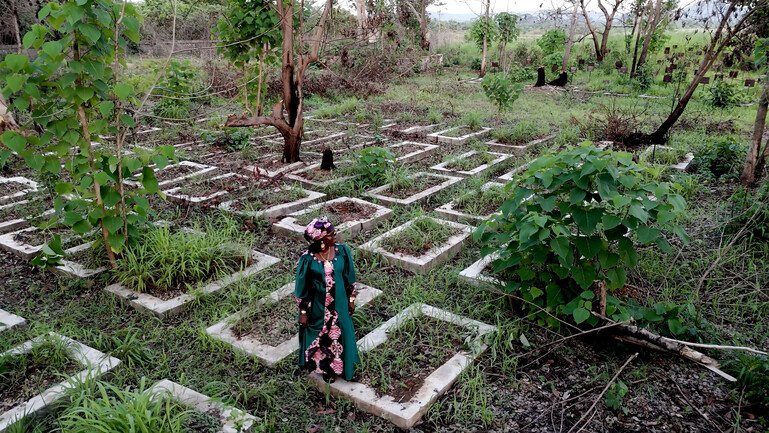
Many families were unable to carry out traditional mourning rituals during the outbreak, leaving a lasting impact on communities affected by Ebola.
Credit:
Licence: Attribution CC BYWellcome
Listen and understand: Social anthropologists propose a fix
Watching from England, Melissa Leach – a social anthropologist and then director of the Institute of Development Studies at the University of Sussex – saw what was going wrong. The international response had gathered pace and was well-funded, but its ignorance of local feelings and customs meant it was doing more harm than good.
Leach spoke with anthropologists with experience of the region, and took their views to a meeting convened by Wellcome. She successfully put forward the case – to scientists, the UK government and NGOs – that the accelerating outbreak was not just a medical issue, but a social one. She argued that social anthropology – understanding how people live, grieve, care for the sick and relate to authority – could help.
We had to focus on changing behaviour and that meant being informed by local knowledge – understanding communities, gaining their trust, working with them.
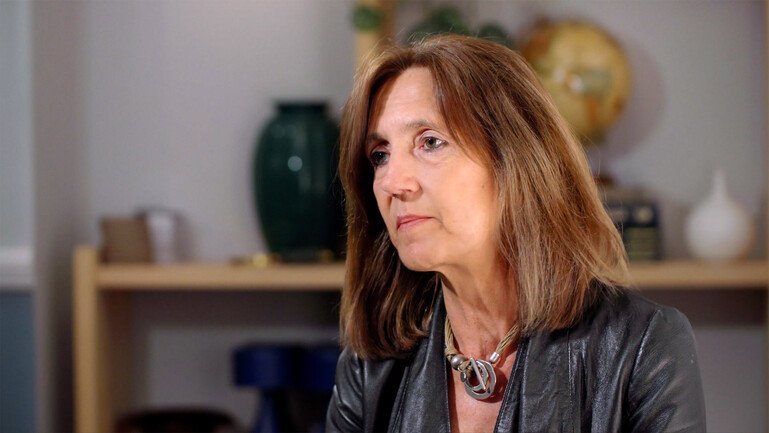
Professor Melissa Leach helped make the case that the West African Ebola outbreak was a social challenge as well as a medical one, leading to the creation of ERAP.
Credit:
Licence: Attribution CC BYWellcome
With funding from Wellcome and what was then the UK Department for International Development (now the UK Foreign, Commonwealth & Development Office), Leach helped establish the Epidemic Response Anthropology Platform, or ERAP. This online hub allowed experts from around the world to upload evidence about community practices and beliefs in the region in real time, feeding directly into responders’ actions.
Some of ERAP’s evidence came from academic journals. Other guidance was uploaded by anthropologists with in-country knowledge, with some submitting insights live from the outbreak. The platform published briefings, ran training for responders and directly answered questions submitted by health workers on the ground.
“The aim was to help that response be more socially sensitive, more attuned to local context and understandings, and therefore more effective,” Leach says.
From the beginning, Leach had understood how crucial getting input from anthropologists in the field would be – and there was one name she thought of immediately.
The chief who halted Ebola: in-country experts show what works
In 2014, anthropologist Esther Mokuwa was asked to return to her home country of Sierra Leone and provide in-depth reporting for ERAP in addition to data that was being carefully gathered by 24 Sierra Leonean colleagues. She went into the field and visited those most affected to learn why so many people didn’t trust the responders.
She soon discovered that a Paramount Chief in Kailahun District on the Liberian border – one of the worst-affected regions – had halted the spread of the virus. Straight away she went to find out how.
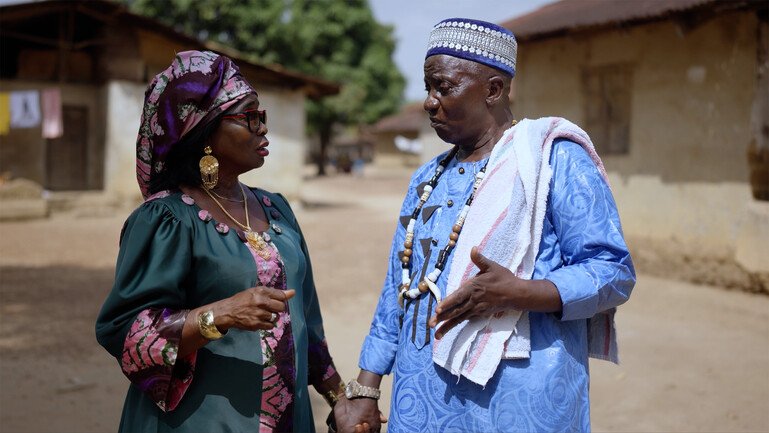
Anthropologist Esther Mokuwa learned how Chief Kallon and local volunteers contained Ebola by working with communities rather than against them.
Credit:
Licence: Attribution CC BYWellcome
Chief Kallon had banished Ebola from his chiefdom before anywhere else in Sierra Leone, without waiting for external guidance. Working with community volunteers, youth leaders and traditional authorities, he had created a local task force to conduct contact tracing, local quarantining of the sick, and burials that limited transmission but respected deeply held beliefs about death and community.
“They didn’t lift the funeral ban, they just made an adjustment,” says Mokuwa. A special team equipped with personal protective equipment did the traditional washing and burying, rather than the family. There were clear actions taken to make this socially acceptable, Mokuwa notes: “Allow people to see what they are doing. Employ somebody who is from the community.”
Through patient fieldwork, Mokuwa also surfaced the logic behind how communities cared for the sick and honoured the dead – knowledge that explained behaviours the international response had earlier deemed irrational. This offered a path to working with communities rather than against them.
Mokuwa recorded everything she observed and uploaded it to ERAP for responders across West Africa to see.
Turning the tide on the epidemic
Thanks to information gathered through the platform, the strict international ban on traditional funerals was lifted. It was replaced with a protocol for ‘safe and dignified burials’, based on Chief Kallon’s strategy. This was designed with community knowledge at its heart, assembled through ERAP.
From the perspective of communities, if you didn't pay the right attention to your dying and your dead, there was even greater worry that those people would not become an important ancestor, and the socio-cultural and ecological life of the community would essentially fall apart.
ERAP’s knowledge also saw remote Ebola treatment facilities replaced with community care centres embedded in villages and towns, with safety practices that allowed relatives to visit the sick.
The impact was immediate. People who would previously have hidden a sick relative started calling responders. Families could begin to grieve again. Trust, once broken, began slowly to be rebuilt.
“There was a major recognition that the Ebola response anthropology platform, together with Wellcome, had helped to turn the epidemic around,” says Leach. In 2016, Sierra Leone had been declared Ebola free.
Groundbreaking ways of working create a blueprint for the future
Rebuilding trust didn’t just help bring down transmission. It also built support locally for conducting research on Ebola while the epidemic was still live. This allowed Wellcome and others to fund trials of the first Ebola vaccine, ERVEBO®, during the outbreak.
These trials helped show that the vaccine was highly effective. ERVEBO® has since been used to fight the Zaire strain of Ebola – the form of ebolavirus that caused the 2013-16 epidemic – in multiple subsequent outbreaks. It was authorised in 2019.
How ERVEBO® was deployed
Health authorities used a ‘double ring vaccination’ strategy to help contain the outbreak in West Africa. This involved targeting those most at risk of infection. When a case was detected, all close contacts received the vaccine, as well as their contacts, to prevent transmission.
The vaccine was also given preventatively to healthcare workers as an extra layer of protection. This strategy has now become standard practice in outbreaks of Ebola for which there are vaccines available.
Funding from Wellcome also supported development of Ebola diagnostics during the outbreak, as well as setting up a permanent genomics lab in Sierra Leone.
Just as involving social anthropologists in the response was unprecedented, so too was running research trials. “Never before was research a core component of an outbreak response,” says Josie Golding, Head of Epidemics and Epidemiology at Wellcome. In the decade since, conducting research and trials during an outbreak has become normal. “It’s just shifted the way outbreak response is done,” Golding says.
However, the research conducted during the 2013-16 outbreak was a mix of successes and failures overall, Golding says. “It was a scattergun approach, it wasn’t coordinated, and there were probably a lot of missed opportunities.” It was also fortunate that an Ebola vaccine candidate already existed that could be taken off the shelf and tested. “That’s not the case for most epidemic-prone diseases.”
In response, the WHO created its R&D Blueprint for Epidemics to guide future epidemic-related research and make it more effective. Meanwhile Wellcome and other partners established CEPI, the Coalition for Epidemic Preparedness Innovations, to accelerate the development of candidate vaccines against epidemic and pandemic threats, to provide options for testing when future threats emerge.
This is the big shift that characterises the period after the West African epidemic, says Golding. “Not just having research be a core component of the emergency framework, but it being much more tightly coordinated."
ERAP’s influence didn’t end with the 2013-16 outbreak. It went on to become the model for the Social Science in Humanitarian Action Platform, or SSHAP.
Set up with Wellcome support, SSHAP is today run by the UK Foreign, Commonwealth & Development Office. It is a permanent platform that replicates how ERAP works to help create contextually informed, community-engaged emergency responses for any infectious disease outbreak. It has been mobilised for Covid-19, mpox and cholera.
Community engagement needed again: 2026 outbreak
Ten years have passed since the end of the West African Ebola epidemic, but the disease has not gone away. In 2026, a new outbreak began in the Democratic Republic of the Congo (DRC) and Uganda, caused by the Bundibugyo strain of the virus.
Evidence suggests that vaccines developed for one Ebola species – such as ERVEBO® for Zaire – may not adequately protect against others, and there are currently no approved vaccines, treatments or rapid tests specifically for the Bundibugyo species. The outbreak has been declared a Public Health Emergency of International Concern by the WHO.
Vaccine candidates that target non-Zaire Ebola strains are in development, and CEPI is looking to fund trials of these – but it will be some time before the vaccines are ready to evaluate in DRC and ultimately be deployable to protect communities.
Without vaccines, the key principles of Ebola control become even more critical: contact tracing, case isolation, early detection, patient care, and safe and dignified burials. The WHO has been explicit that community engagement will be key to the success of these measures and bringing this outbreak under control.
“The WHO’s framework, it’s about the community perspective. It’s your starting point and everything comes from that,” says Golding.
The lesson ERAP taught the world a decade ago – that communities are not obstacles but essential partners, that listening is not optional but foundational – has never felt more urgent. That is what ERAP taught the world, and what SSHAP was built to sustain.
“We know what to do to survive after the last experience”

Now a member of Sierra Leone's Lunsar Cycling Team, Kondema says cycling has helped him rebuild his life after the outbreak.
Credit:
Licence: Attribution CC BYWellcome
For Kondema, thinking back to the epidemic is painful, and he doesn’t like to dwell on the past. Instead, he likes to think about what he might do with the Lunsar Cycling Team in the future, such as travel outside of Sierra Leone to compete in races. “Cycling helps me forget about my family dying,” he says.
But when he does think about the West African epidemic, he believes that people would be better prepared in the face of another Ebola outbreak in his country. “That many people won’t die,” he says, “because we know what to do to survive after the last experience."
The Ebola Response Anthropology Platform was co-ordinated by anthropologists at: Njala University, The London School of Hygiene and Tropical Medicine LSHTM, The Institute of Development Studies IDS, The University of Sussex, The University of Exeter. It was supported by Wellcome and the UK’s Foreign, Commonwealth and Development Office (FCDO) through the Research for Health in Humanitarian Crisis (R2HC) programme. Wellcome and FCDO also provided core support for the follow-on Social Science in Humanitarian Action Platform (SSHAP).
Tags

