
RECOVERY: the game-changing Covid-19 treatment trial that saved lives
At the start of the Covid-19 pandemic, no treatments were proven to work. But just a few months later, the RECOVERY trial showed that the cheap steroid dexamethasone could reduce deaths in severely ill patients. The trial's findings and its rigourous, large-scale design continue to influence clinical practice worldwide.

Credit:
Licence: Attribution CC BYWellcome
9-minute read
9-minute read
Summary
Highlights of the RECOVERY trial:
- Identified dexamethasone as the first drug to reduce deaths in severe Covid-19, saving an estimated 1 million lives globally
- Changed NHS policy within hours of announcement
- Showed some widely-used drugs were ineffective
- Established a new global benchmark for emergency clinical research
- Expanded overseas with backing from Wellcome
In March 2020, Bryan White was admitted to hospital in Leicester with Covid-19, seriously unwell and fearing for his life. “I was admitted on the Sunday... and basically told, 'if you don’t improve by next Friday, you’ll be in intensive care’,” he recalled.
But his condition improved dramatically – enough for him to go home sooner than anyone expected. The reason became clear in the months that followed. During his stay, Bryan agreed to take part in the RECOVERY trial and was assigned to treatment with dexamethasone.
“That’s the only reason I’m probably here now,” he said. “[It was] obviously the drug – but we didn’t know that at the time.”
At the start of the pandemic, nobody knew how Covid-19 worked, or how the most seriously ill patients would respond to potential treatments. But thanks to evidence from RECOVERY, Bryan’s story would be repeated about a million times around the world.
Discover how team science saved lives during Covid-19
Pressing play on the video above will set a third-party cookie. Please read our cookie policy for more information.
When Covid-19 struck, doctors had no proven treatments for the sickest patients. The RECOVERY trial changed that. Hear from infectious disease consultant Maheshi Ramasamy about the landmark study that identified dexamethasone as the first drug to reduce deaths from severe Covid-19 – a discovery estimated to have saved around one million lives worldwide.
Maheshi Ramasamy
Dexamethasone is a steroid. It's quite a strong steroid. But at that time, it seemed quite a brave decision to actually try an immunosuppressant to dampen your immune response against a virus. Actually, very quickly, it became apparent because of the RECOVERY trial that dexamethasone was actually phenomenally good at saving lives.
Maheshi Ramasamy
I first encountered Covid as a clinician. It was probably late January, early February. We'd started to hear the reports of what was happening in China as well as in Italy, and we were feeling scared because we could see what was happening to patients. So on that Monday, we had nine patients, on Tuesday we had 11 patients. And then it just sort of exponentially grew from there. And actually our hospital couldn't cope. We didn't have the oxygen supply to manage all those people. It was horrendous. It was like being in a war. We had no idea how to manage this clinically, and that felt really disempowering — these desperately unwell people and nothing really that you could offer them.
Maheshi Ramasamy
The RECOVERY trial was a study that aimed to identify a treatment for Covid-19, and it aimed to look at drugs that we already knew about, that perhaps were used for other conditions, and to see if we could pivot and use one of those to treat this new viral infection. And in RECOVERY, we had a sort of computer based randomisation system. It's a bit like tossing a coin. You have an equal chance of either having the usual standard of care or having the usual standard of care, plus this additional drug.
Maheshi Ramasamy
It was a cheap, readily available, easy to access drug that just translated into lives saved. It was just extraordinary. We wouldn't have had that data if it wasn't for this study. With good communication, good collaboration, you can generate high quality, robust data that has real impact into real people's lives. As a clinician, I feel incredibly proud to have been part of a study that actually has tangibly saved lives from Covid-19. I think for me as a physician, that feels really like I've done something worthwhile.
Hopelessness on the wards
The early days of the pandemic were defined by fear and uncertainty as hospitals were quickly overwhelmed. “It was horrendous. It was like being in a war,” recalled Maheshi Ramasamy, infectious disease consultant at Oxford University Hospitals NHS Foundation Trust.
The mechanisms of this new viral infection – and the body’s response to them – were simply not understood. Some patients would deteriorate rapidly, developing severe breathing problems requiring oxygen or intensive care. It was impossible to know which treatments would work and when they could be given safely.
With no reliable evidence, clinicians felt powerless to help patients who became severely unwell.
“Normally, as a clinician, if somebody comes in with a disease and you don’t know what to do, you can phone a colleague, look it up – there are resources you can access,” explained Maheshi. “But here, nobody knew what to do and the hospital couldn’t cope. We didn’t have the oxygen supply to manage all these people.”
The quest for answers
As clinicians worked on the frontlines, University of Oxford professors Martin Landray and Peter Horby were devising a systemised way to understand which existing drugs might be effective in treating severe cases of Covid-19. Their collaboration was initiated through Wellcome, combining Martin's expertise in large-scale clinical trials and Peter's expertise in emerging infectious diseases.
They knew the traditional clinical trial model would be no match for the speed and scale of the viral infection. As Martin explained, this trial needed to be pragmatic and “right for pandemic conditions”. Getting up and running quickly and safely would require close collaboration between researchers, data scientists, funders, regulators, health bodies and medical teams on the ground.
Partnering with two experienced clinical trial units in Oxford, the team quickly secured ethical and regulatory approvals. Data specialists and programmers helped to develop the randomisation system and data capture tools they’d need to collect robust evidence on a large scale.
Key features of the trial design
- A simplified protocol: a straightforward action plan for how the trial should be run
- The use of known drugs: to secure ethical and regulatory approvals quickly
- Training physicians on the frontline: equipping medical teams to enrol patients onto the trial
- A streamlined consent process: to make it faster and easier for sick patients to agree to take part
The Randomised Evaluation of Covid-19 Therapy (RECOVERY) trial began by studying a small number of drugs, all at the same time. As results came in, treatments that didn’t work were dropped from the trial and new options were added. This allowed the trial to adapt quickly and focus on the most promising options.
Thanks to the partnership with the NHS and the number of people enrolled, RECOVERY was able to generate reliable evidence in a short time, which was crucial. And the streamlined trial design paid off. “Within about nine days of drafting the protocol, we walked across the road to the John Radcliffe Hospital and the first patient was enrolled,” explains Peter. Maheshi was the doctor who enrolled this patient.
“At that stage of the pandemic, it was clear that even if vaccines were developed quickly, they would take time to reach people around the world,” says Nick Cammack, Head of Product Development Partnerships at Wellcome. “That made it essential to identify accessible, effective treatments that could save lives immediately,” he says.
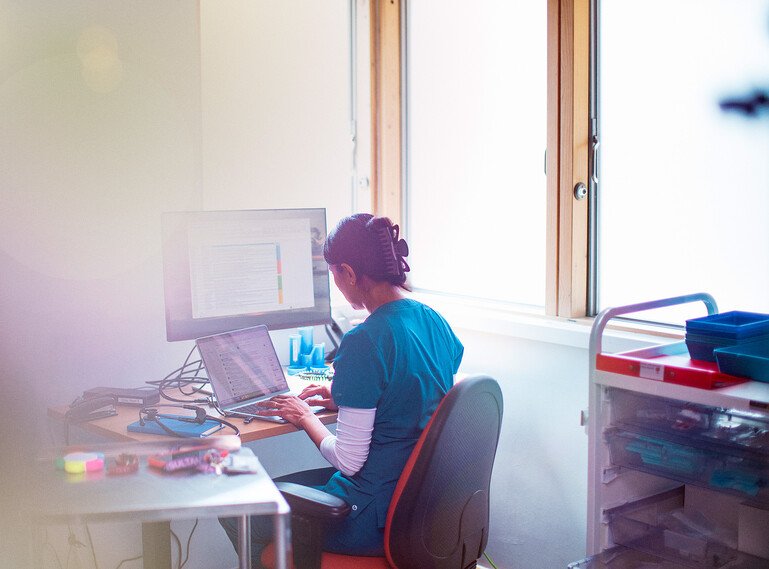
Dr Maheshi Ramasamy in the early years of the RECOVERY trial. As an infectious disease physician at Oxford's John Radcliffe Hospital, Maheshi enrolled the first participant in the landmark study that identified dexamethasone as a life-saving treatment for severe Covid-19.
Credit:
Licence: Attribution CC BYWellcome
A moment of hope
By June, it was official – robust evidence from the trial showed dexamethasone was highly effective in treating patients with severe Covid-19. The evidence showed that the drug:
- Cut the risk of death by one third for patients on ventilators
- Reduced deaths by almost one fifth for those on oxygen only
It was a breakthrough moment in the pandemic. “That was really incredible as a medic,” explains Maheshi. “Having felt so helpless at the start of the pandemic, here was something that tangibly saved lives.”
Better still, this highly effective drug was, in Peter’s words, “simple, cheap, and already widely available”.
Why dexamethasone worked in Covid-19
In the early stages of infection with Covid-19, the body’s immune system is fighting to control the virus as it multiplies rapidly.
However, in severe cases, the immune response can become excessive. This causes damaging inflammation, especially in the lungs.
Dexamethasone, a steroid, reduces this harmful inflammation by dampening the immune response. It does not benefit patients with mild disease and may cause harm if used too early.
Why was its use in the trial controversial initially?
Early in the pandemic, many clinicians were concerned that suppressing the immune system during a viral infection could worsen outcomes.
The RECOVERY trial provided robust evidence that showed the opposite. Dexamethasone was very effective at reducing deaths in severely unwell patients with Covid-19.
Scaling impact globally
The RECOVERY trial findings were rapidly implemented across the NHS and global clinical practice. Ben Morton, an intensive care clinician based in Malawi during the pandemic, saw the impact of the trial findings firsthand. “It felt empowering to have something to fight Covid-19 with,” he said. “People saw dexamethasone and thought yes, we can do that. We already have it.”
Backed by funders including Wellcome, the international expansion of RECOVERY launched in February 2021, evaluating treatments suitable for diverse low- and middle-income healthcare settings.
It was incredible to see the speed at which the findings of RECOVERY were taken up throughout the world.
Working with a wide range of global partners, Wellcome continued to support advances in Covid-19 treatments, helping extend the reach of RECOVERY across Asia and Africa. In 2023, the trial broadened its scope further to test treatments for other types of pneumonia, including influenza and non-viral, community-acquired pneumonia.
“Expanding RECOVERY internationally was crucial to ensure the evidence reflects patients around the world,” said Nick Cammack. “Building a diverse global evidence base helps ensure treatments are effective and practical in the settings where they’re most needed.”
Legacy and learnings
The evidence from the RECOVERY trial is estimated to have saved around 1 million lives globally.
RECOVERY is regarded by some as a model for how to run clinical trials during health emergencies and target other widespread medical issues, such as heart disease.
“One of the things [RECOVERY] did was show trials don’t have to be done the way they’ve always been done,” said Martin Landray. “Any additional work or delays would have cost time and lives.”
“The simplicity of RECOVERY could carry into trials going forward. There are signs of progress in various places ... the MHRA has done a fantastic job speeding up their approvals timelines, the ethics committees likewise.”
The trial is a reminder of the importance of scientific collaboration, public engagement and rigorous evidence in the face of health crises.
It also shows the power of sharing trial results quickly and publicly – something that’s left a lasting legacy, according to Maheshi: “I think it’s had a real knock-on effect for engaging people with research more generally. They see the impact that research has on their lives.”
This rings true for Bryan. Reflecting on his experience, he said: “Without trials and tests, science wouldn’t move forward. As long as I live, I’ll be happy to volunteer.”
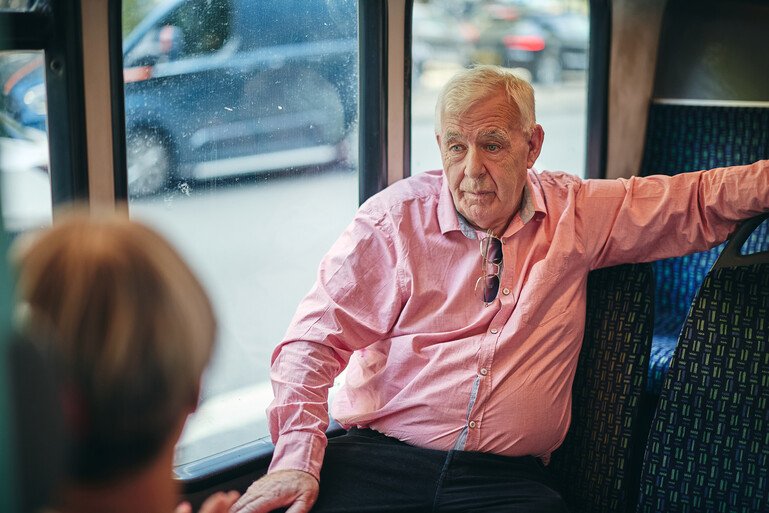
Bryan White took part in the RECOVERY trial after being admitted to hospital with severe Covid-19 in 2020. He received dexamethasone as part of the trial – a treatment later shown to reduce deaths in seriously ill patients and estimated to have saved around one million lives worldwide.
Credit:
Licence: Attribution CC BYWellcome
RECOVERY trial timeline
First confirmed COVID-19 cases in the UK
First British person dies from COVID-19
RECOVERY protocol drafted
First patient enrolled
RECOVERY trial begins. Thousands of COVID-19 patients enrolled
RECOVERY rolled out across the UK
10,000 patients enrolled
Announcement that dexamethasone reduces death from severe COVID-19.
Four hours later, treatment with dexamethasone becomes NHS policy. The rest of the world follows swiftly.
RECOVERY International launches
RECOVERY expanded to test treatments for other types of respiratory infection.
The RECOVERY trial was established and funded by UK Research and Innovation (UKRI) and the National Institute for Health and Care Research (NIHR). Its international expansion, launched in 2021, has been supported by a wider group of global funders, including Wellcome, the Gates Foundation, the UK Foreign, Commonwealth & Development Office, Health Data Research UK, and the Medical Research Council, alongside international research partnerships.
Tags

