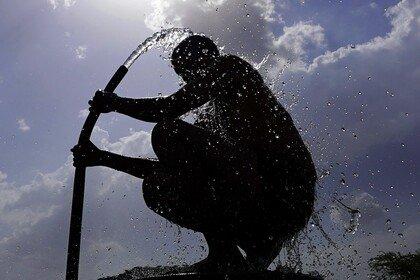
What is extreme heat and why is it a problem?
Driven by climate change, extreme heat is affecting millions of people around the world. 2024 was the warmest year on record at about 1.55°C above pre-industrial levels as high temperatures become the new normal. And the number of people affected is rising.
Why we're concerned about extreme heat
The increase in heatwaves and abnormally high temperatures is affecting public health globally. Exposure to extreme heat puts everyone at risk as our bodies have to work harder, pushing organs to their limits. Those less able to regulate their temperature, such as infants, pregnant people, older adults and people with existing health conditions are at greater risk. Rising temperatures are also affecting mental health, enabling infectious diseases to spread further and faster, and worsen the health effects of air pollution.
The impact of heat on the body and society varies with geography. Traditionally warmer regions are better adapted to managing extreme heat while heat impacts in cool climates can occur at much lower temperatures.
There are significant impacts on economies and people’s livelihoods. Heat affects people’s ability to work, particularly those with outdoor jobs, such as farming and construction. Rising temperatures are also making it more difficult to grow food.
What we can do about it
There are already effective, evidence-based solutions to help us address the causes of climate change and adapt to extreme heat.
Adaptation is about more than surviving climate shocks, it’s about building resilience: cooler cities, cleaner air and infrastructure that protects communities from heatwaves, floods, droughts, wildfires and storms. These measures can save lives and strengthen economies. Investing in research can enable us to keep pace with solutions that evolve with our changing world.
We’ve supported studies and reports into heat and infectious disease, mental health, pregnancy, and the impact of heat on the health, wellbeing and livelihoods of outdoor workers, indigenous and marginalised communities.
Extreme heat explained
Learn more about extreme heat and why it is one of our priorities.
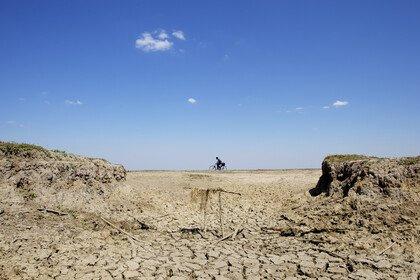
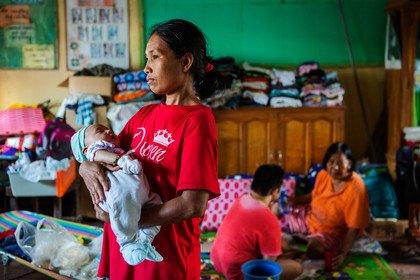
Rising temperatures are endangering workers and economies worldwide.
This short film, developed for COP30, Brazil, shows the impact of extreme heat on workers in India, Spain, Tanzania and the UK.
2.4 billion workers are affected by extreme heat worldwide and globally it’s costing our economies $1.09 trillion per year.
Pressing play on the video above will set a third-party cookie. Please read our cookie policy for more information.
Introduction:
Maksood, rickshaw driver from Mumbai, India: The heat wave and heat gets so intense that my metal-body rickshaw feels like an oven.
Narrator: Last year was the hottest year on record. We've breached 1.5° C above industrial temperatures.
Emily, pregnant school teacher from London, UK: I got dehydrated. I panicked that something was wrong with my baby.
Narrator: We've seen a 60% increase in heat related mortality.
Iñigo, construction worker from Granada, Spain: On sites in Granada there have been cases of death from heatstroke.
Title: The Heat is On:
Ollie Jay, Professor of Heat and Health, University of Sydney, Australia: In Australia, extreme heat is responsible for $7 billion in lost productivity every year. It not only threatens our lives, but it threatens our livelihoods.
Lauren Mills, Research Manager, Climate and Health, Wellcome: We know that 2.4 billion people in the workforce will be impacted by extreme heat.
Maksood: The heat has been increasing so much that I can’t even describe it. This year in March it went up to 38, 39 degrees. Inside it becomes suffocating. The body becomes so weak you start feeling dizzy. It makes a person completely crazy, mentally.
I can’t drive the rickshaw during the day because of the heat. The only thing is that the income I could have earned during the day I’m not able to earn at night. On top of this, my daughter’s expenses, my wife’s expenses, then the household rations. I can’t manage it all.
Iñigo: We’ve had almost three months of temperatures above 40 degrees which did not happen before. We often work on the top floor of the building and there is no shade.
Professor Ollie Jay: Temperature is actually measured in the shade. Often, construction workers are exposed to direct solar radiation, which means they'll be exposed to temperatures that are at least 15° C higher. So that's like 58° instead of 43°C. That's an enormous heat load on the body.
Iñigo: My family and friends tell me I should consider quitting.
Lauren Mills: Heat waves are different in different places because people are acclimatized to different temperatures. So a heat wave in the UK above 28° C is obviously different – in Tanzania wouldn't classify a heat wave.
We know that there are certain vulnerable populations. Children are particularly vulnerable to increases in heat. Pregnant people are particularly vulnerable as well.
Emily: People don't usually think that the rainy UK can have any warm months, but actually we are starting to get a lot of heat waves and the country is not ready for that. During the summer heat wave, I was between 12 and 17 weeks pregnant. It's quite tough for a pregnant teacher anyway, let alone during a heat wave.
Lauren Mills: Rises in temperature affect pre-term birth. It affects the neuro development of babies. And so we need to know how this is impacted so that we can best protect mothers and babies.
Professor Ollie Jay: If we're going to not just survive but thrive in a warmer future, we need to reimagine the way in which we safeguard human health against the threat of extreme heat and hot weather.
Lauren Mills: We need to reduce the use of fossil fuels globally and protect those most vulnerable to the effects of climate change. But we also know that temperatures are going to continue to increase. So we need to adapt in a context-specific way.
Professor Ollie Jay: We can break up work shifts. We can change them to different times of the day to reduce heat exposure. They can be triggered by a heat alert system which is not just dependent on temperature but also integrates things like the amount of solar radiation there is, whether it's cloudy, whether it's clear.
Lauren Mills: Providing scientific evidence on how people are impacted by heat means that this evidence can then be used by policy makers to change policies.
Professor Ollie Jay: It's in the employer's interest to take extreme heat seriously. Of course, it impacts the health and well-being of their employees, but it also affects their bottom line. So, there's really no reason why they shouldn't be taking heat seriously and doing their best to try to implement evidence-based solutions that help everybody in the workplace cope with extreme heat.
Analysis
Read analysis and perspectives from researchers, decision-makers and experts in extreme heat and its impacts.

Research we've funded
Explore examples of research projects we’ve funded around the health effects of extreme heat and solutions to protect people.
Early pregnancy and heat: Researching the impacts of extreme heat on the risk of neural tube defects in babies and ways to prevent this
Extreme heat events increase the risk of hyperthermia (overheating) during pregnancy, which is associated with birth defects, particularly neural tube defects (NTDs).
This project aims to identify how heat affects neurulation – a critical stage in the development of the neural tube. It also seeks to discover if supplementing with nutrients, such as folic acid, can prevent hyperthermia-related NTDs.
Team of 4 investigators
United Kingdom
Mental health and heat: Understanding the role of heat related changes in the gut-microbiota-brain-axis in psychosis (HEATMAP)
People with psychoses are more likely to be admitted to hospital and die during higher ambient temperatures and heatwaves. However, little is known about the mechanisms through which heat might trigger or exacerbate psychoses.
The goal of this research is to understand how heat-related changes in gut microbiota might trigger or exacerbate psychoses.
Team of 8 investigators
United Kingdom and India
Heat adaptation: Testing interventions to help manage the health effects of heat in rural and urban settings in Pakistan
Climate change has increased average global temperatures and increased the number, duration and intensity of extreme heat events. South Asia is one of the worst affected regions.
This study will feature a cluster randomized controlled trial in rural and urban Pakistan to evaluate the impact of a bundle of interventions (including education, behaviour change and incentives) on heat-related illnesses and secondary outcomes.
Team of 7 investigators
United Kingdom and Pakistan
Heat and agricultural workers: Evaluating the role of trees in mitigating the health effects of extreme heat exposure
Outdoor agricultural workers are among the worst affected by extreme heat exposure. In Tanzania, this is 70% of the working population, making heat a health and economic concern.
The research will start by understanding heat risk and local adaptation practices, then evaluate how trees on croplands alter microclimates to potentially protect workers against chronic kidney disease, dehydration, and cardiovascular strain.
Team of 8 investigators
United Kingdom and Tanzania
Heat and labour exploitation: Heat Stress, Debt Bondage and British Overseas Investment in Cambodian Construction
Cambodia is one of the most climate vulnerable countries and a site of labour exploitation and modern slavery.
This project will use new tools to explore the dynamic workplace geography of heat exposure under climate change. It will open up a field of scholarship on the health dimensions of labour exploitation under climate change and generate context-specific data directed towards policy.
Royal Holloway, University of London, United Kingdom
Watch
Find out more about the effects of extreme heat and why we need action.

video duration


Item 1 of 7
Pressing play on the videos will set a third-party cookie. Please read our cookie policy for more information. If no video is displaying you may need to be logged into a Google account to watch YouTube.
Contact

Lauren Mills
Research Manager
Wellcome