Climate-sensitive infectious diseases – the challenge
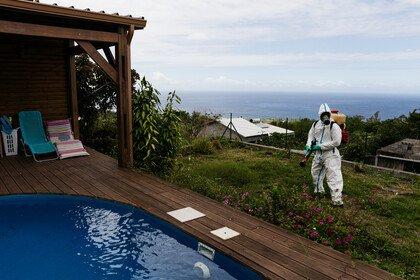
Infectious diseases – such as cholera, malaria and dengue – are among the biggest health challenges in the world today. Many of these diseases are ‘climate-sensitive’ and rising global temperatures and extreme weather events are providing more favourable conditions for them to spread.
Why we're concerned about climate-sensitive infectious diseases
Around 9.5 million people die each year from infectious diseases and many of these infections can also leave people with long-lasting ill-health. The greatest impacts are suffered by world's poorest people and in communities that are furthest from the innovations that could save lives.
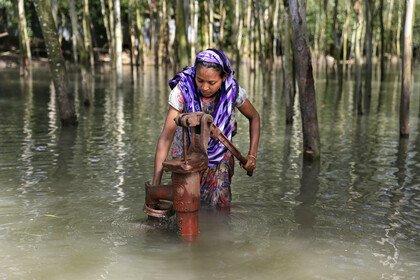
Climate change is making this worse. Global heating is expanding the areas in which disease-carrying vectors, like mosquitoes and ticks, can survive and conditions in which they can thrive. Higher levels of rainfall, flooding and droughts can create stagnant water for insects to breed and increase the likelihood of contaminated water.
Extreme weather can also disrupt health systems and affect the treatment of infectious diseases.
What we can do about this
We can tackle the causes of climate change and the increased threat to people and economies from infectious diseases.
Joint action, across sectors and locations, can enable us to get ahead of outbreaks and respond when they occur. Collaboration between infectious disease and climate experts could both strengthen our understanding through research, and our capacity to respond to emerging threats.
We can build digital infrastructure that allows us to integrate climate information into things like health systems planning, supporting national adaptation plans and early warning systems.
We fund research into early warning systems for climate-sensitive infectious diseases. We’ve funded studies in areas including modelling tools, the genomics of infectious diseases, better understanding how they emerge and spread, and improving risk monitoring, preparedness and responses.
Climate-sensitive infectious diseases – explained
Learn more about how infectious diseases are impacted by climate change and why this is one of our priorities.

This video explores the Harmonize project, funded by Wellcome. Harmonize is enabling the creation of user-friendly toolkits for tracking and predicting climate-sensitive infectious disease in the Amazon and the Andes.
Pressing play on the video above will set a third-party cookie. Please read our cookie policy for more information.
Rachel Lowe, Earth Sciences, Barcelona Supercomputing Center: Extreme weather events, environmental degradation and socioeconomic inequalities exacerbate the risk of infectious disease outbreaks. However, there are significant challenges in obtaining science-based evidence to understand and predict the impacts of extreme events and landscape changes on disease risk, leaving communities and climate change hotspots vulnerable to increasing health threats.
The Harmonize project brings together an interdisciplinary community of practitioners, community-based organisations, local governments, climate scientists, epidemiologists, software engineers and data scientists to address these challenges.
The vision for Harmonize is to build user-friendly and reproducible toolkits that can serve decision makers operating in climate change hotspots in Latin America and the Caribbean, including cities, small islands, highlands and the Amazon rainforest and allow them to produce data sets that they can analyse to track changes in infectious disease risk due to environmental and climatic change.
The Harmonize toolkit is an open-source, reproducible suite of digital tools designed to collect, harmonise, and integrate diverse data sources, including ground-based sensors, drone imagery, satellite observations, climate reanalyses and forecasts, as well as socioeconomic surveys and health surveillance systems.
In Harmonize we organise engagement workshops in Brazil, Peru, Colombia and the Dominican Republic where we invite experts from meteorological services, health ministries, environment agencies and international partners to support evidence-based decision-making and understand better the impacts of climate change on disease risk in those regions.
This gives us the opportunity to develop engagement activities to get to know the end users of our toolkits, to exchange ideas and to hear their expectations about the Harmonize project.
Gabriel Cabrassco Escobar, Associate Professor, Institute of Tropical Medicine, Universidad Peruana Cayetano Heredia, Peru: So in Harmonize we want to pave the way to construct a common language between all the disciplines that work on the climate science climate crisis. We believe that the common language will be data. So we are trying to get harmonised data so they can understand what is going on from multiple lenses.
Christovam Bercellos, Senior Researcher, Fundação Oswaldo Cruz, Brazil: We have a huge amount of data but limited capacity to analyse it. So through Harmonize we hope to gain new opportunities to create and analyse large databases using more modern techniques.
Miriam Matos, Head of Risk Management and Health Focal Point, Dominican Republic Meteorological Service: The idea of the project is to homogenise both health and meteorological data.
Gilma Matilla, Consultant Centro de Cambio Climático y Salud para América Latina y el Caribe (CLIMAS HUB), Institúta de Salud Pública, Universidad Javeriana, Bogotá, Colombia: Because the idea is to translate that data that they are harmonising to try to train not only the researchers, not only the academics but also the decision making process.
Flavio Coelho, Senior Researcher, Infodengu coordinator, Fundação Getulio Vargas, Brazil: We hope that Harmonize will be able to provide us with a more continuous and reliable climate record that we could use to feed our predictive models.
Rachel Lowe, Earth Sciences, Barcelona Supercomputing Center: In each of the Harmonize hotspots, we have a strong connection with the public health and environmental agencies who are helping us identify the hotspots for disease cases, vectors, and helping us choose the areas where we can conduct detailed mapping using drones to help the community better understand the zones most at risk for infectious disease transmission.
Ricardo Vivas, Entomologist, Tolima Secretary of Health, Colombia: I believe that this project can help us among other things to determine whether climate change might alter the geographical distribution of vectors.
Bárbara Priscilla dos Santos Corrêa, Health Surveillance, Department of Cametá, Brazil: And what do we observe? Many deforested areas and many families now living around these deforested areas as well. These families are very susceptible to developing diseases, especially vector-borne diseases. Diseases that arise from the opportunity for vectors to feed, such as malaria vector, dengue vector or even Chagas disease vector.
Hernán Vargas, Advisor, Tolima Health Secretariat, Colombia: I believe these are some of the key areas where strong coordination is needed, technological development that allows us to strengthen health information systems in departments and regions like Tolima. This would be particularly valuable in the context of managing certain pathologies, arboviral disease, respiratory illnesses and chronic non-communicable diseases. I think this could be a very good initiative.
Claudia Codeço, Senior Researcher, Fundação Oswaldo Cruz, Brazil: The hot spot in the Amazon region was chosen because it is a climate-sensitive area and there are problems with Chagas and malaria and other diseases that are affected by climate change.
Rachel Lowe, Earth Sciences, Barcelona Supercomputing Center: So we're joined today by representatives from the Ministry of Health, from the vector control teams, from the environment agency, and by team members who are working in the field to collect data and ensure that the Harmonize tools were going to serve the needs of the community.
Maria Galvas, Qualitative Researcher and Analyst, Universidad de los Andes, Colombia: The Harmonize project is very important to engage with the local communities because we're focusing on specific territories where people can perceive the changes in climate change and suffer the infectious diseases that we're trying to address through these technologies. Community engagement is also very important when you're using drones to collect data because in ethical terms they are being filmed from above.
Izabel Reis, Researcher, Fundação Oswaldo Cruz, Brazil: Today we carried out an awareness activity with children regarding the environment, climate change and how this has affected vector-borne disease in that region.
Raquel Martins Lana, Researcher, Barcelona Supercomputing Centre, Spain: In this activity, we try to simulate with them how the dengue transmission happens and also how they can avoid the infection using protection.
Rachel Lowe, Earth Sciences, Barcelona Supercomputing Center: In the school, we conducted some activities and some games to help the children understand how dengue is spread and the kind of measures that families can take to protect themselves from dengue. The teams show everyone the drone images that were taken in the previous campaign to help identify the hot spots for disease transmission. So areas close to garbage dumps, areas with lots of dogs or areas that are known to have lots of mosquitoes.
Gabriel Cabrassco Escobar: The idea is to understand how the people interact with their environment in a really granular way. So we know where the households are distributed. We know how close they are to the rivers or to the forest. And in these places we want to understand what is the interaction with some infectious diseases such as malaria, dengue, leptospirosis or other climate-sensitive diseases.
Felipe Aramburo, PhD candidate and fieldwork coordinator, Universidad de los Andes, Colombia: So we selected the three study sites not only based on altitude but we had places with different vegetation coverage and ecosystem coverage and also that had different land uses and human interaction.
Mauricio Santos-Vega, Assistant Professor of Biological Sciences, Universidad de los Andes, Colombia: These data sets are going to be useful because usually all the satellite products are at really core scales. So drones are going to help us downscale and have finer resolution and get those local features that potentially are affecting human health.
Ana Rotaro, Researcher, Instituto Nacional de Pesquisas Espaciais, Brazil: So this mapping – the maps that are produced afterwards – are delivered to the Health Department and the local community as feedback from the project so they can use these findings, these maps, to have a more detailed understanding of the territory and to see changes that have occurred over the years.
Isabel Escada, Senior Researcher, Instituto Nacional de Pesquisas Espaciais, Brazil: In these places we look for landscape features related to the vectors such as domestic waste water sites, areas with trash or other places with stagnant water, flooded areas or others. These conditions are favourable for the presence of certain species like triatomine bugs (kissing bugs) or even some mosquitoes.
Claudia Codeço, Senior Researcher, Fundação Oswaldo Cruz, Brazil: There are teams using drones to map the region and also teams applying questionnaires to get information from the community. And there are entomologists collecting vectors from potential breeding sites and everything in collaboration with the local health professionals.
Arnaldo da Silva Fayal, Senior Entomologist, Secretariat of Health of Pará, Brazil: Each vector has its own environment and we can detect this environment based on images taken by the drone.
Ricardo Vivas, Entomologist, Tolima Secretary of Health, Colombia: It is known from laboratory studies that temperature affects some vectors by causing them to move, some even change their altitudinal distribution so it’s possible that due to these environmental changes, vectors might migrate and be found in areas where they previously weren’t. This could change the disease distribution map.
Rachel Lowe, Earth Sciences, Barcelona Supercomputing Center: We install weather stations directly in the areas we're studying because having high quality local weather data to describe rainfall, temperature, humidity and wind speed is essential for accurately understanding the environmental drivers of disease transmission.
Diego Xavier, Associate Researcher, Fundação Oswaldo Cruz, Brazil: With the Harmonize project we are installing two stations: one in Cametá another in Mocajuba. These are areas without meteorological stations in the country and one of them has a sensor that measures the river level to greatly assist the population in moving around and understanding the issues of floods and droughts.
Hernán Gallego, owner Private reserve Charco Azul, Colombia: The contribution you are making through the installation of this weather station is truly invaluable. So sometimes one dreams that it’s worth trying to share these ideas and engage people in restoring what is so important to us: life, the environment, the world and nature.
Ricardo Vivas, Entomologist, Tolima Secretary of Health, Colombia: Here in the department of Tolima, the main breeding sites for the Aedes Aegypti (mosquito) are the water tanks called ‘tanques bajos’ which people use to store water for washing clothes and they also use the water for cooking. Here in Tolima we have a problem with inconsistent water supplies.
On screen text: Açaí Market, Cametá, Brazil.
Isabel Escada, Senior Researcher, Instituto Nacional de Pesquisas Espaciais, Brazil: Açaí is a very important product for the riverine population of the Amazon and the lower Tocantins region. However if not handled or processed properly it can lead to the transmission of diseases.
Rachel Lowe, Earth Sciences, Barcelona Supercomputing Center: The fruit is often harvested from palm trees in forested areas where the triatomine bugs, which are also known as kissing bugs, are common. The açaí pulp can become contaminated with the parasite that causes Chagas disease. When consumed raw or unpasteurised, contaminated açaí can lead to outbreaks of the disease in humans.
I'm based at the Barcelona Supercomputing Center where I lead the global health resilience group. We work together with climate scientists, software engineers and knowledge integration experts to develop cutting edge modelling and digital innovations at the intersection of climate and health to enhance resilience to climate-sensitive health challenges globally and locally.
We make use of Marinostrom 5 which is one of the world's most powerful supercomputers. It can make 314 million billion calculations per second, which is like the combined power of hundreds of thousands of laptops working together at once.
With this sort of computing power, the Harmonize team is able to collect and process large volumes of climate, environment and socioeconomic data along with health data, and combine this with new longitudinal ground truth data collected in our study sites.
We use this data to calibrate and downscale coarser resolution earth observation, climate reanalysis and forecast data to ensure the Harmonize data sets can better represent the climatic and environmental conditions in the places where disease transmission is happening among communities.
Christovam Bercellos, Senior Researcher, Fundação Oswaldo Cruz, Brazil: I believe Harmonize can help us advance the climate and health debate. Nowadays both the population and civil society are mobilised for the question of climate health.
Bárbara Priscilla dos Santos Corrêa, Health Surveillance, Department of Cametá, Brazil: I believe that new technologies will help us. It will help us to actually visualise the problem itself.
Izabel Reis, Researcher, Fundação Oswaldo Cruz, Brazil: The Harmonize project brings great benefits to the community, one of them being the identification of the locations with high occurrences of the diseases.
Gabriel Cabrassco Escobar, Associate Professor, Institute of Tropical Medicine, Universidad Peruana Cayetano Heredia, Peru: Currently all the institutions working in climate spend a lot of time dealing with data and with data problems. So the idea is that Harmonize really reduces the burden on those institutions so we can get better and more timely decisions for those emergencies.
Antonio Miguel Monteiro, Senior Researcher Instituto Nacional de Pesquisas Espaciais, Brazil: The Harmonize project has this very nice feature which is to bring together health people that work at real places to get a bit of reality to the climate and environmental scientists working with remote senses or observation.
Miriam Matos, Head of Risk Management and Health Focal Point, Dominican Republic Meteorological Service: It will also make it easier to create early warning reports about how a particular phenomenon might affect health.
Dr Waddy Cassado, Epidemiologist, Dominican Republic Ministry of Health: So now with this project I think it would be helpful because we are going to have the same format. We're going to have harmonised data so we can have an early response and in this case decrease the morbidity and the mortality which is the most important in terms of health.
Luiz Belino, Department of Public Health Emergencies, Brazilian Ministry of Health: It brings the possibility of decentralised health surveillance for specific actors in certain states and municipalities who will have opportunities for actionable work as this tool will make health surveillance efforts easier to implement. It’s a big advance.
Marcella Ohira, Director of the Science Diplomacy Centre, Inter-American Institute for Global Change Research (IAI): I think the uniqueness of Harmonize is the emphasis on data. How can we get data from different groups, research and policy, environmental and health? And then if there's a toolkit that can be applicable in different contexts with local data, you know, it might be very useful and facilitate the decision making processes.
Flavio Coelho, Senior Researcher, Infodengu coordinator, Fundação Getulio Vargas, Brazil: Harmonize project takes our project into a whole new level of data, helping us deal with things that we possibly could not within our project.
Hernán Vargas, Advisor, Tolima Health Secretariat, Colombia: We need projects that allow us to truly take ownership, projects that enable us to take clear, timely, direct and swift decisions to intervene on behalf of our populations. I believe those are the kinds of projects that regions really need.
Rachel Lowe, Earth Sciences, Barcelona Supercomputing Center: Vector-borne diseases don't just impact health. They strain economies through lost productivity and very high healthcare costs. They also deepen inequalities by impacting communities most at risk. By creating multi-source, temporally and spatially harmonised data sets, the Harmonize toolkit empowers researchers, public health professionals and policy makers to uncover actionable insights, strengthen health systems, and build climate resilience.
Contact
Connect with our team working on climate-sensitive infectious diseases

Felipe Colón
Technology Lead
Wellcome
Connect with Felipe:

To get in touch or for information email:


