

Heat and maternal health: protecting pregnancies in a warming world
Extreme heat is putting pregnancies at growing risk. Across Africa, Asia and Europe, Wellcome-supported researchers are working with communities to understand how heat affects mothers and babies – and develop practical, locally led solutions that can protect them.

Licence: All Rights Reserved
6-minute read
6-minute read
In Mount Darwin, Zimbabwe, Aqueline Tsekera’s floppy wide-brimmed sunhat and one-litre water bottle go everywhere with her. They are part of a simple, affordable cooling toolkit designed by her community. With guidance from local heat champions, she understands when she is most at risk and how to protect herself and her unborn baby from the fiercest heat.
“Because of this programme…we know what to do when we are pregnant to save both the mother and the baby you’re carrying,” she says.
Throughout her pregnancy, Aqueline is monitored and supported by the Heat Adaptation for Pregnant Women and Infants (HAPI) project. As heat can affect every aspect of life, this community-driven study tests behavioural, structural and environmental interventions to protect pregnant women and newborns from the dangers of extreme heat.
The study is one of many projects supported by Wellcome through a £20m investment in research around the world to build understanding of the impacts of extreme heat on maternal and child health and identify the best solutions.
Watch: How simple solutions are protecting pregnancies from extreme heat
Pressing play on the video above will set a third-party cookie. Please read our cookie policy for more information.
In Mount Darwin, Zimbabwe, communities are building their own defences against rising heat. This film follows the women, community workers and researchers turning simple ideas into protection for mothers and babies
Heat standards that consider pregnancy
Rising heat is making pregnancy more dangerous, increasing the risk of complications. An Oxford-led analysis warns that if global warming reaches 2.0°C, 3.79 billion people (almost half the global population) could be living with extreme heat by 2050.
Expectant mothers and newborns are among the most vulnerable. Yet for decades, much heat-stress guidance has drawn on evidence gathered in the 1950s among healthy young US military trainees – a very different population from pregnant women working in extreme heat.
The HAPI study aims to make protecting women like Aqueline in extreme heat part of policy and practice, not an afterthought.
In Mount Darwin, temperatures can soar to over 40°C. “When we are working in the fields, I feel so tired. Working in the heat I sweat a lot, I get so dizzy and it affects my health as well as my baby’s health,” says Aqueline.
“The challenge is still just basic understanding of the impacts of heat on pregnancy,” says Fortunate Machingura. She is director of climate, environment and health at Zimbabwe’s Centre for Sexual Health and AIDS Research. “We see a lot of adverse newborn outcomes. We see lower birth weight, we see prolonged labour in the antepartum phase, but we also see preterm birth – children coming much earlier than their time. And it’s because of this labour in the heat.”
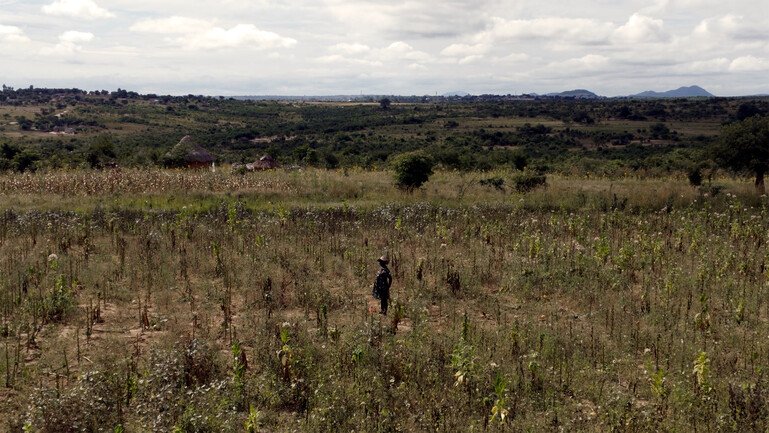
Aqueline Tsekera lives in Mount Darwin, where community-led research is helping families adapt to rising temperatures during pregnancy.
How heat affects pregnancy
The work in Zimbabwe is part of a growing body of evidence on heat and maternal health across multiple countries.
In 2019, clinical research fellow Ana Bonell moved to The Gambia to carry out Wellcome-funded research into maternal and fetal heat stress. “We found [a new] relationship showing that as heat exposure increases, you get a reduction in the placenta's ability to deliver nutrients and oxygen – a vital supply to the baby.”
In another Wellcome-funded study published in December 2022, Ana found that for pregnant women working in extreme heat, there was a 17% increase in strain on a fetus for every extra degree Celsius of heat stress.
“When we set out there was a clear medical need,” says Fortunate. “Our team did a systematic review that looked at 200 studies across the globe, and it established that preterm birth is likely in the context of escalating heat, and the odds of preterm birth will increase by 26% in heat waves. That alone was enough for us.”
Community-designed solutions
The HAPI study involves 1,600 women, with sites in urban Tshwane in South Africa and rural Mount Darwin in Zimbabwe. Researchers are monitoring health throughout pregnancies at the same time as tracking the impact of interventions. Collaboration and community partnership are vital.
“We’re about changing lives with very simple solutions that can be scaled. Working with communities is at the core of our work. We call that co-production, co-creation, co-designing. And all the interventions we’ve developed out of HAPI come from the community. They’re rooted from the ground," explains Fortunate.
The result is simple, low-cost interventions. These include cooling kits containing a sunhat, water bottle, umbrella and fan. Other steps include painting house roofs reflective white, broadcasting radio messages and training community ‘heat champions’. These village health workers share information and daily alerts via an app called Mother Heat Alert.
“Our solutions must work in our context. Complexity doesn’t always mean feasibility. You want things that you know communities will use, will own, and will run with, and would change lives. That’s what we do,” says Fortunate.
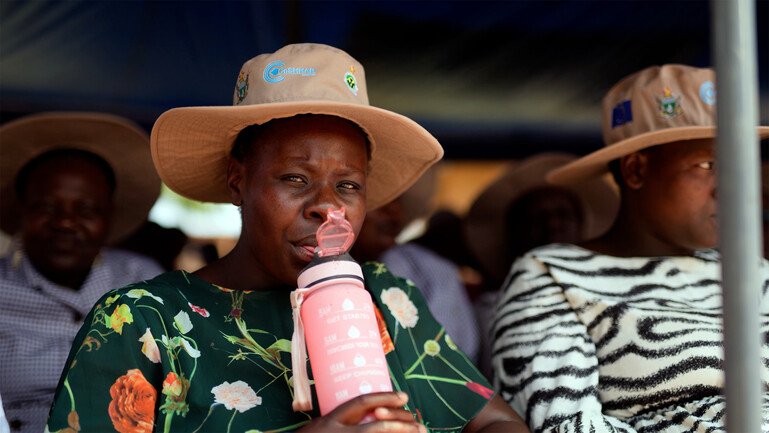
Aqueline Tsekera uses a water bottle provided through the HAPI project’s cooling kit, one of several community-designed measures to help protect pregnant women from extreme heat in Mount Darwin, Zimbabwe.
A global research network
Through support for nine research projects across four continents, Wellcome has paved the way for the first global research network on extreme heat and pregnancy, helping translate this work into real-world heat adaptation strategies and solutions across Africa:
- In The Gambia, midwife Edrisa Sinjanka works alongside scientists led by Ana Bonell. They found that for every 1°C rise in temperature, fetal stress rose significantly, by 17 percent.
- In India, Jane Hirst and colleagues have shown that working in high heat can double the risk of miscarriage and stillbirth.
- In Pakistan, Jai Das and his team are studying how heat, dehydration and nutrition interact.
- In the UK, Amy Mizen and Lucy Griffiths lead the MAGENTA project, which is revealing how heat affects pregnancy outcomes even in temperate climates. The team uses data from communities in Wales and London.
"Community-based research has identified practical, evidence-based interventions that can be taken now to protect mothers and babies from the dangers of rising temperatures."
Science keeping pace with global heating
As climate breakdown continues, global evidence is essential to driving policy change. The emphasis must be on turning local adaptation into scalable protection. And we must do this fast enough to match the warming trajectory.
The practical solutions developed and tested in Zimbabwe represent a crucial step forward. “It produces solutions that are tangible, that are realistic – grounded in real-world settings and culturally legitimate,” says Fortunate. “The next chapter [is] to look at clinical outcomes, birth outcomes and newborn outcomes. I really hope these very simple interventions can change women’s lives.”
“I feel happy with the people from my community who helped. I think I will give the same wisdom and advice to my children because it has also helped me to be healthy – myself and my baby. I see a bright future because of this programme,” says Aqueline.
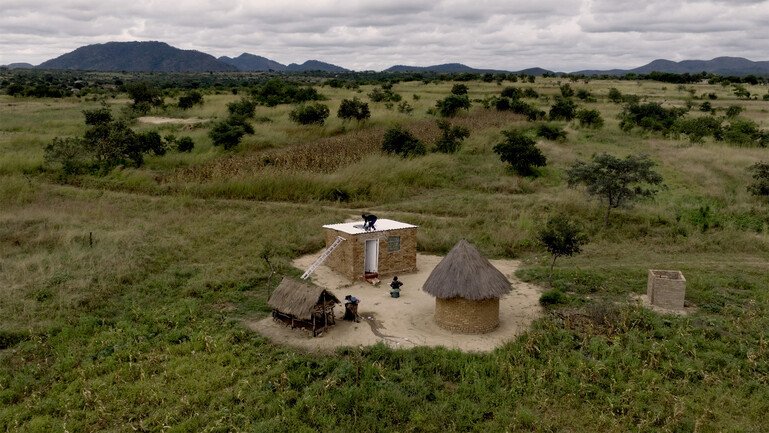
Researchers and communities are testing simple adaptations, including reflective white roofs, to help reduce indoor heat exposure.
Life as a heat champion
Rutendo Mhandu is one of HAPI’s fifteen heat champions in Mount Darwin Hospital, Zimbabwe.
“Heat affects the health of pregnant women. They may deliver a stillbirth or a lightweight baby – some of the things that I have heard happened to pregnant women because of heat. They swell, the legs swell, they get dizzy and they also give birth to preterm babies, and babies that are not very healthy.
One of the roles of a heat champion is to read the message in the morning on the Mother Heat Alert app, and then visit a pregnant woman. You tell them, today it’s hot. You don’t walk in the sun without a hat. You have to take your umbrella, you need to take the water bottle with you. This is the advice we give them, because it is our role to be champions.
We also speak to their husbands. The husband may also remind the wife not to work in the sun and to stay under the shade. It is important for a man to be part of this programme. If the man is involved, it all goes well.
I’m so proud to be a heat champion. I feel good knowing that I’m helping my community and they are not staying behind.”
Tags
Related content

