How the response to Ebola outbreaks shows why we need to prioritise preparedness
To prevent and manage Ebola outbreaks, we need to prioritise community engagement and invest in early detection and surveillance infrastructure in at-risk countries.
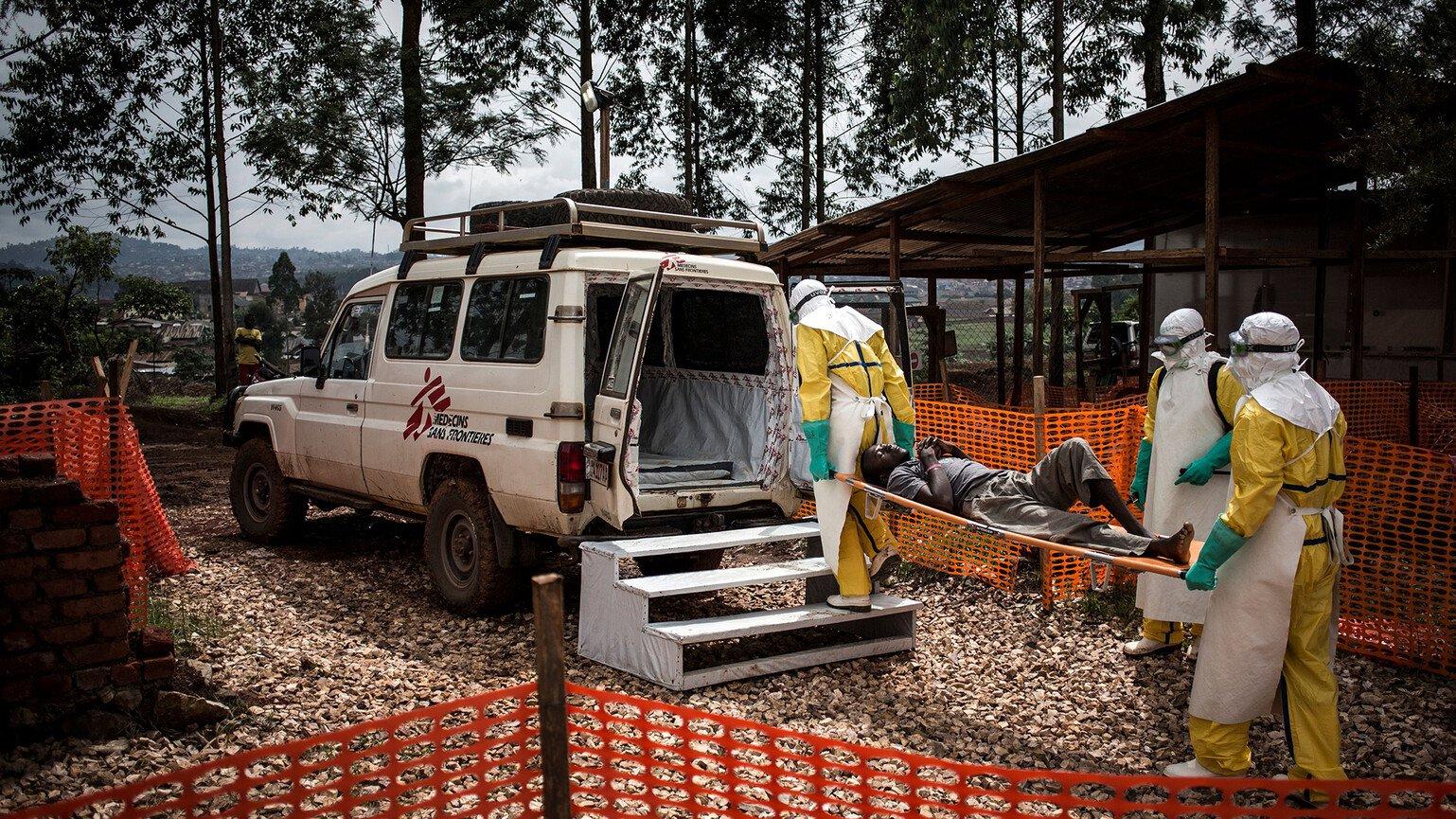
Credit:
Licence: All Rights ReservedPhoto by John Wessels / AFP via Getty Images
What is Ebola?
In 1976, a new virus was discovered in the Democratic Republic of Congo (DRC). The disease, which killed nearly 9 in 10 of those infected, was named after the nearby Ebola river. Following an almost 20-year period without any human cases being detected, since 1994 outbreaks have become increasingly common.
Ebola is a zoonotic disease, meaning it first spreads from animals to humans, most likely through contact with infected wildlife. Disease in humans can be caused by four types of the virus. Once someone is infected, the virus spreads through direct contact with the blood or bodily fluids of a person (or animal) who is sick or has died, as well as through objects – such as clothing or bedding – contaminated with those fluids. Some types of the virus cause outbreaks more often than others. The 2026 outbreak is caused by the less common Bundibugyo ebolavirus, which there are no licensed vaccines or treatments for. On May 18 Africa CDC declared the outbreak a Public Health Emergency of Continental Security.
The average case fatality rate of Ebola is around 61%. For disease caused by the Bundibugyo species, case fatality rates are around 30-50%, although this is based on limited data.
A vaccine candidate for the Ebola Zaire species was developed in 2005, but a failure to prioritise epidemic preparedness and research meant that important safety trials, which can be done at any time, were not completed until the largest epidemic began in West Africa in 2014, nine years later.
Learnings from the 2014-16 West African Ebola epidemic
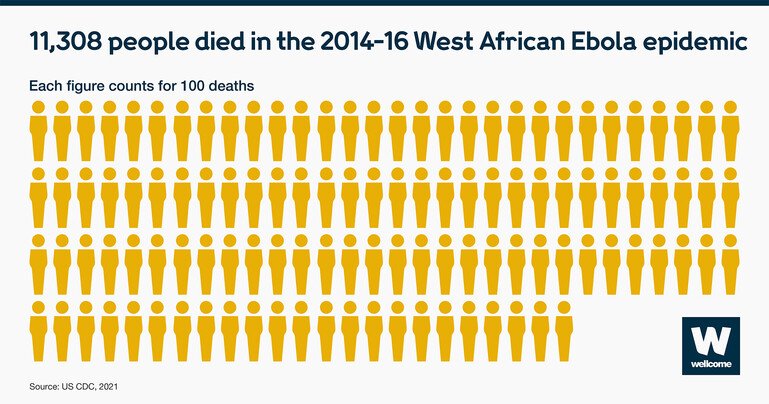
The West African Ebola epidemic of 2014-2016 resulted in more than 28,000 suspected cases and 11,000 deaths. At the time, there were no vaccines and no treatments to help combat the disease. The amount of virus in the body is highest around the time of death. This meant that traditional funeral practices – where family members may wash or touch the body – often led to further infections during earlier outbreaks. This epidemic was the catalyst for prioritising critical research to have better tools to prevent and respond to Ebola.
First, national public health agencies and partners worked closely with communities to adapt traditional burial practices in ways that remained respectful but safer. Trusted local volunteers formed burial teams and helped build understanding – a crucial step in bringing outbreaks under control.
Second, research was integrated into the response to help contain outbreaks. Public health officials and the pharmaceutical company Merck fast-tracked rVSV-ZEBOV, a single dose experimental Ebola vaccine. After a highly successful field trial in 2015, and further use to contain outbreaks in DRC in 2018, the US and EU regulators approved the vaccine in 2019. A second two-dose vaccine developed by Johnson & Johnson was approved by the WHO for use in 2021.
However, while advances have been made to improve community awareness and diagnostic capability, new outbreaks continue to occur and grow.
Tackling outbreaks without vaccines
Current Ebola vaccines and treatments have been developed to target and protect against the Ebola Zaire virus, which is most commonly associated with disease. But we know that there are other Ebola virus species that cause outbreaks – like the Ebola Sudan and Bundibugyo species, which are harder to contain.
For example, the 2022 Ebola outbreak in Uganda was caused by the Ebola Sudan virus. Without an approved vaccine, health officials in Uganda focused on contact tracing, improving access to and speed of testing, and building treatment centres to care for patients and help prevent transmission. Community engagement and effective public health messaging was also essential to their response.
Without vaccines, the key principles of Ebola control become even more critical: contact tracing, case isolation, early detection, patient care, safe and dignified burials, and informed community engagement.
What to prioritise to be better prepared
1. Community engagement and social mobilisation
Community engagement and social mobilisation are central to effective preparedness. Response teams must work with the community, religious leaders, journalists, radio stations, and partner organisations to build awareness of Ebola and trust in healthcare systems.
2. Widespread surveillance and monitoring systems
Reinforcing disease surveillance across at-risk countries will help prevent any chance of a surprise resurgence. This requires a combination of a well-trained healthcare workforce with knowledge of the symptoms to identify the disease, and the laboratory facilities to confirm the presence of the virus.
During outbreaks, research to improve disease surveillance is essential. Analysing the data from surveillance systems can reveal the factors driving disease spread. This can provide an evidence base to inform interventions that are targeted to the communities most affected.
It is also critical to have pre-agreed research protocols and established partnerships in place, so that if an outbreak is detected, clinical studies can begin quickly.
3. Prioritising filling the research gaps
Critical research is required to better prevent and respond to both current and future Ebola outbreaks. Research gaps have been highlighted through a global consultation with researchers, public health institutes, and at-risk countries and are outlined in the World Health Organization’s filovirus research and development map.
We need to invest in research to create accurate diagnostics, treatments, and vaccines which are accessible and affordable for the most at risk populations.
An important aspect of this is research that to better understand how to work with and engage communities impacted by Ebola, particularly when considering implementing new tools such as vaccines.
These three priorities all require funding. Without sustained global investment and collaboration, we will continue to face outbreaks without the tools to respond effectively.
Wellcome is supporting preparedness efforts through the Coalition for Epidemic Preparedness Innovations (CEPI), who are actively engaged in accelerating the development and availability of vaccines to contain outbreaks. We are also supporting the International Severe Acute Respiratory and emerging Infection Consortium (ISARIC), who are working on an adaptive clinical trial platform to assess treatments for Ebola.
It is vital that we continue to invest beyond reactive responses alone. We urgently need to close the gaps in how we prepare for and respond to health threats to prevent outbreaks from escalating and protect those most at risk.
For enquiries relating to the current Ebola outbreak, please email: epidemics@wellcome.org
Tags