Antimicrobial resistance: it’s time for global action
Wellcome is supporting research and policy action to better understand the global burden of antimicrobial resistance and accelerate the development of new interventions.
A rise in antimicrobial resistance is causing the spread of drug-resistant infections. These infections are harder (if not impossible) to treat, and cause over a million deaths every year. It’s one of the most urgent public health problems the world faces today. Here’s what you need to know.

Abhishek N.Chinnappa
Pressing play on the video above will set a third-party cookie. Please read our cookie policy for more information.
Watch this explainer video, featuring Professor Paul Turner and Dr Andrew Kambugu, as we put together a plan to take on antimicrobial resistance (AMR).
[Narrator] This is a story many people think they know. You might have seen a poster like this, this, or that. Maybe a public safety announcement. Stories warning about the misuse of antibiotics and the deadly infections that will escape our control if these drugs stop working.
It's called antimicrobial resistance. And each year, it's associated with millions of deaths. But —everyone is missing a key part of the story: just how bad things really are.
Patients and infections are missing from the global picture. Communities, cities, countries. Entire populations who need help most, simply not recorded.
It's extremely difficult, often impossible, to treat someone with a drug-resistant infection.
This is Professor Paul Turner, Director of the Cambodia Oxford Medical Research Unit.
And that's Dr. Andrew Kambugu. He heads up the Infectious Diseases Institute in Uganda.
So, drug-resistant infections can be bacterial like E-coli and Streptococcus, but also viral, parasitic or fungal.
There's a drug-resistant Klebsiella spreading across Europe. The multidrug-resistant tuberculosis throughout South East Asia and Africa. Anyone, anywhere is at risk from these superbugs. In fact, let's revisit this graph from earlier.
No doubt at all, this is a global public health issue. But like Andrew points out, the burden is not affecting everyone equally.
And — it's probably worse than we think.
Unless we gather more data and standardise surveillance, it's tricky to know exactly what to do about antimicrobial resistance.
We can't track everyone who's affected or what impact it's having on healthcare systems. Doctors can’t monitor treatments, and governments struggle to set targets, figure out where to focus funding, or roll-out necessary interventions.
So, how can we fill in these huge data gaps?
Once we properly monitor the issue at a local scale, we can start to reveal the bigger picture. The regional, national and global burden of antimicrobial resistance will become much clearer.
But, AMR surveillance isn't that straightforward. In Africa, a recent study found that across these countries, than 1% of the laboratory network was able to identify drug-resistant microbes. And data is often written by hand, making it difficult to combine and analyse digitally.
If we want to tackle this global problem, we need to be able to collect and combine evidence from everywhere.
And while teams work on filling the data gaps, modelling reports like GRAM are really important to help everyone better understand the global picture.
Although, saying that, there’ll never be one single solution.
Yes, some countries are worried about overusing antimicrobials,but many don't even have access to enough of them in the first place.
There’s a lot to do.
Over the next 25 years or so, the world could witness 39 million deaths directly attributable to antibiotic resistance.
We have to find a way to keep track of drug-resistant infections.
The best tool to tackle this health crisis is to properly understand it. Decision-makers need more data, turning facts into action.
But, the countdown has already started. These treatments are there to help save your life, until one day... they just can’t.
Antimicrobial resistance occurs when microbes (like bacteria, viruses, fungi and parasites) change and adapt over time, developing resistance to drugs designed to kill them.
One of the most common types of drug resistance is antibiotic resistance – when bacteria become resistant to antibiotics. Drugs like antibiotics are a vital tool for modern medicine. Without them, routine medical procedures, minor injuries and common illnesses can become life-threatening.
But it’s not just bacteria – fungi, viruses and parasites also develop antimicrobial resistance.
The result is that many drugs, including antibiotics, antivirals, antifungals and antiparasitics are becoming less effective at treating illnesses. Resistant microbes can survive and multiply. If they are passed on to other people, animals or the environment, resistant infections can spread rapidly.
Antibiotic resistance: when bacteria changes in a way that makes antibiotics ineffective.
Antimicrobial resistance: when microbes, such as bacteria, fungi or viruses, change in a way that makes the drugs used to treat them ineffective.
Drug-resistant infections: the illnesses that are caused by resistant microbes, resulting in an infection that is much harder – or potentially impossible – to treat.
Researchers estimate that around 1.14 million people die because of antimicrobial resistance every year.
From the rapid spread of highly drug-resistant Klebsiella pneumoniae across Europe, to the concerning levels of multi-drug-resistant tuberculosis throughout South-East Asia, drug-resistant infections are a threat to us all.
Genes associated with drug-resistant bacteria have even been found in the Arctic Circle and Antarctica, some of the remotest places on Earth.
However, low- and middle-income countries are the most affected.
Most children under five who die because of antimicrobial resistance are in the world's poorest countries. And every year, over 200,000 newborn babies, mostly in low- and middle-income countries, die because of sepsis that is resistant to antibiotics.
Drug-resistant infections are also a threat to global economies, with an estimated annual cost of up to US$3.4 trillion by 2030. Research by the World Bank suggests that antimicrobial resistance will push up to 28 million people into poverty by 2050.
While recent reports and data give us a clearer picture, understanding the true health burden of drug-resistant infections is challenging because of the lack of data and standardised surveillance across different regions and countries. It is possible that many more people are affected than we realise.
Antimicrobial resistance is a natural phenomenon, but its recent growth is largely driven by human activity.
In an era of increased mobility and globalisation, microbes cannot be contained within national borders, spreading between people, animals and through environmental channels like water or soil. The unnecessary exposure of microbes to drugs also creates more opportunities for antimicrobial resistance to develop and spread.
Globally, the World Health Organization estimates that only half of antibiotics are used correctly [PDF 3.9MB].
For example, of the 150 million prescriptions for antibiotics written by doctors in the USA every year, it’s estimated 50 million were not necessary [PDF 3.9MB].
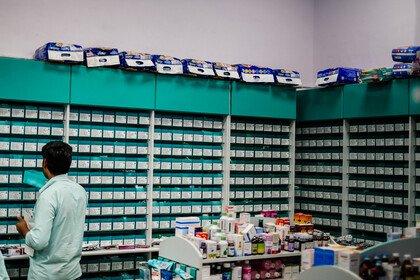
In some countries, regulation on antibiotic use is poorly enforced or doesn’t exist at all. People can buy antibiotics over the counter, and antibiotics can be mistaken for other medications such as painkillers, leading to their overuse and misuse.
On top of this, over 70 per cent of all antimicrobials sold are used in animal farming to promote growth and prevent diseases. And this number is on the rise – with current projections estimating an 8 per cent increase in antimicrobial use in farming by 2030.
Although there is an urgent need to limit the inappropriate use of antibiotics, currently more lives are lost because of lack of access to life-saving antibiotics. Using antibiotics appropriately – and making them available and affordable where they’re needed – are both important for improving global health.
Antimicrobial resistance is one of the biggest health challenges the world faces. To take on this global problem, we need a more coordinated, worldwide response.
Wellcome is supporting research and policy action to better understand the global burden of antimicrobial resistance and accelerate the development of new interventions.
From improving the use of existing antimicrobials to limit the development of drug resistance, to accelerating the development of new interventions and disease surveillance – more must be done to tackle the growing threat of antimicrobial resistance.
Whilst some progress has been made in recent years, it isn’t enough.
Political leaders must come together to set bold targets for reducing the global burden of drug-resistant infections and establish new ways to regularly review and monitor the latest evidence and progress against these goals.
Tags