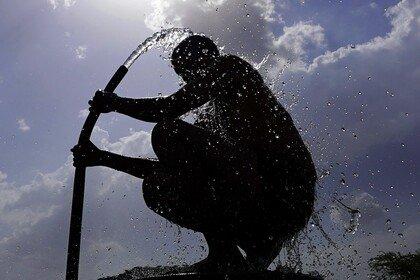
How can cities adapt to protect our health from extreme heat?
Extreme heat is affecting millions of people around the world and becoming more frequent and severe. To tackle this growing threat to public health, writes Professor Jason Lee, we must use solutions shaped for specific populations.


Professor Jason Kai Wei Lee
4-minute read
Professor Jason Kai Wei Lee
4-minute read
In 2024 the average annual global temperature passed the threshold of 1.5°C for the first time, earlier than predicted.
This is part of a pattern. Our world is heating up as a result of human activity, with increases in acute heat events (sudden spikes such as heatwaves) and increases in chronic heat (abnormally high temperatures over time). These are becoming a persistent yet under-recognised threat to public health.
But what happens to the human body as temperatures rise? How does this affect more vulnerable communities such as outdoor workers, infants and older people? What can we do to protect our health?
I direct the Heat Resilience and Performance Centre at the National University of Singapore. We undertake research and innovation, to study different populations and understand their vulnerability to heat stress in the hope of improving resilience.
What happens to the body?
The human body can regulate internal body temperature to about 37°C. But, in extreme temperatures, the body accumulates more heat than it can release, leading to heat strain. It has to work harder to keep internal temperatures down, which can push organs to their limits such as your heart, lungs and kidneys.
You might feel light-headed from a lack of blood and therefore oxygen reaching your brain. Cognitive performance can be compromised, increasing the risk of mistakes or accidents.
Heat stress can progress to heat exhaustion and, in extreme cases, to heat stroke. This happens when the body temperature rises excessively (usually above 40°C) and the central nervous system is compromised. In the worst cases, people may collapse, become delirious, experience organ failure and even death.
In Singapore we have a hot climate year-round and in 2023 we hit a 40-year high at 37°C. As we near the thresholds of human limits, any small increase in temperature can be detrimental to the body’s ability to cope.

The climate crisis is intensifying extreme heat and making it more frequent, putting the health of billions of people at risk. Here are some of the ways it can affect the human body.
How does extreme heat affect health?
Credit:
Licence: Attribution CC BYWellcome
Who is most at risk from extreme heat?
Everyone is at risk of the health impacts of extreme heat but some people are less able to regulate their temperature, putting their bodies under greater strain.
This includes pregnant people, infants, adults over 65 and people on certain medications or with underlying health conditions such as cardiovascular or respiratory diseases.
Where and how people live affects their exposure to extreme heat.
- Cities: Heat is intensified by closely constructed buildings and energy from people and transport. This is called the ‘urban heat island’ effect.
- Income: People on a low income may lack cooling devices for their home.
- Working conditions: Outdoor workers are exposed to hours of heat. Other people work in buildings without cooling.
- Structural inequalities: People of colour are more likely to live in urban heat islands, work in hot environments and have lower incomes.
We need to tackle the problem upstream – not just be reactive
To protect those most at risk we need to understand what happens to different populations and how they respond to extreme heat in the context of their daily lives.
So alongside studying people in the lab, where we can create extreme and future heat conditions, my research profiles people in the field. We use a mixed methods approach combining surveys, physiological measures, such as internal body temperature and heart rate, and ethnography – studying participants immersed and active in their culture and environment. The ultimate aim is to be able to recommend very targeted solutions to reduce heat strain in specific groups of people.
Policy and public health advice needs to be influenced by the needs of diverse populations, as people’s context and priorities have a critical impact on their health in the face of heat. A food delivery rider, paid job-by-job, might respond differently to advice on managing in extreme heat because their livelihood depends on them completing as many deliveries as possible.
What can we do to protect our health from heat – especially in cities?

More than half the world’s population live in cities. And there are many innovative solutions we know to be effective. The C40 Cool Cities Accelerator is a network of global cities moving fast to protect inhabitants who are most at risk from extreme heat, especially those in low-income neighbourhoods. These areas often have fewer trees, more heat-absorbing surfaces, and older buildings with poor insulation.
C40 accelerator cities are:
- putting in tree cover, cool roofs, improved insulation and shaded public areas
- setting up early warning systems, cooling centres, and coordinated emergency protocols to protect residents during heatwaves
- conducting climate vulnerability assessments on power grids, water systems, and transport networks and updating design standards
We are essentially buying time with adaptation tools and solutions. We must use that time to limit temperature rise. We must move away from fossil fuels to renewable energy and tackle powerful climate super pollutants, such as methane and black carbon, so that everyone can not only survive but thrive.
Professor Jason Kai Wei Lee
Director of the Heat Resilience and Performance Centre and Associate Professor in Yong Loo Lin School of Medicine
National University of Singapore
Professor Lee’s main research interests are in fluid balance, thermoregulation and mitigation strategies for improving human performance. He studies the physiological demands associated with passive and exertional heat stress and how humans adapt to ensure optimum performance and survival.
A key aim of his research is formulating a holistic heat management system. This is being achieved by profiling heat strain in humans under various settings, designing and evaluating heat mitigation strategies such as physical conditioning regimes, heat acclimatisation, pre-activity cooling, work-rest cycles and hydration. The final step is translating them into policies such as directives, safety regulations and lesson plans.
Professor Lee serves on various national and international panels related to human performance and safety. He currently co-chairs the Heat Injury Clinical Practice Guidelines at the Ministry of Health, Singapore. He is on the management committee at the WHO-WMO Global Heat Health Information Network (GHHIN) and leads the GHHIN Southeast Asia Hub to scale up efforts in managing the complex health risks posed by rising ambient temperatures. Jason serves on the Technology Advisory Panel for Temasek Trust and the Expert Advisory Group for the Rockefeller Foundation.
Tags